The Black Panther Party
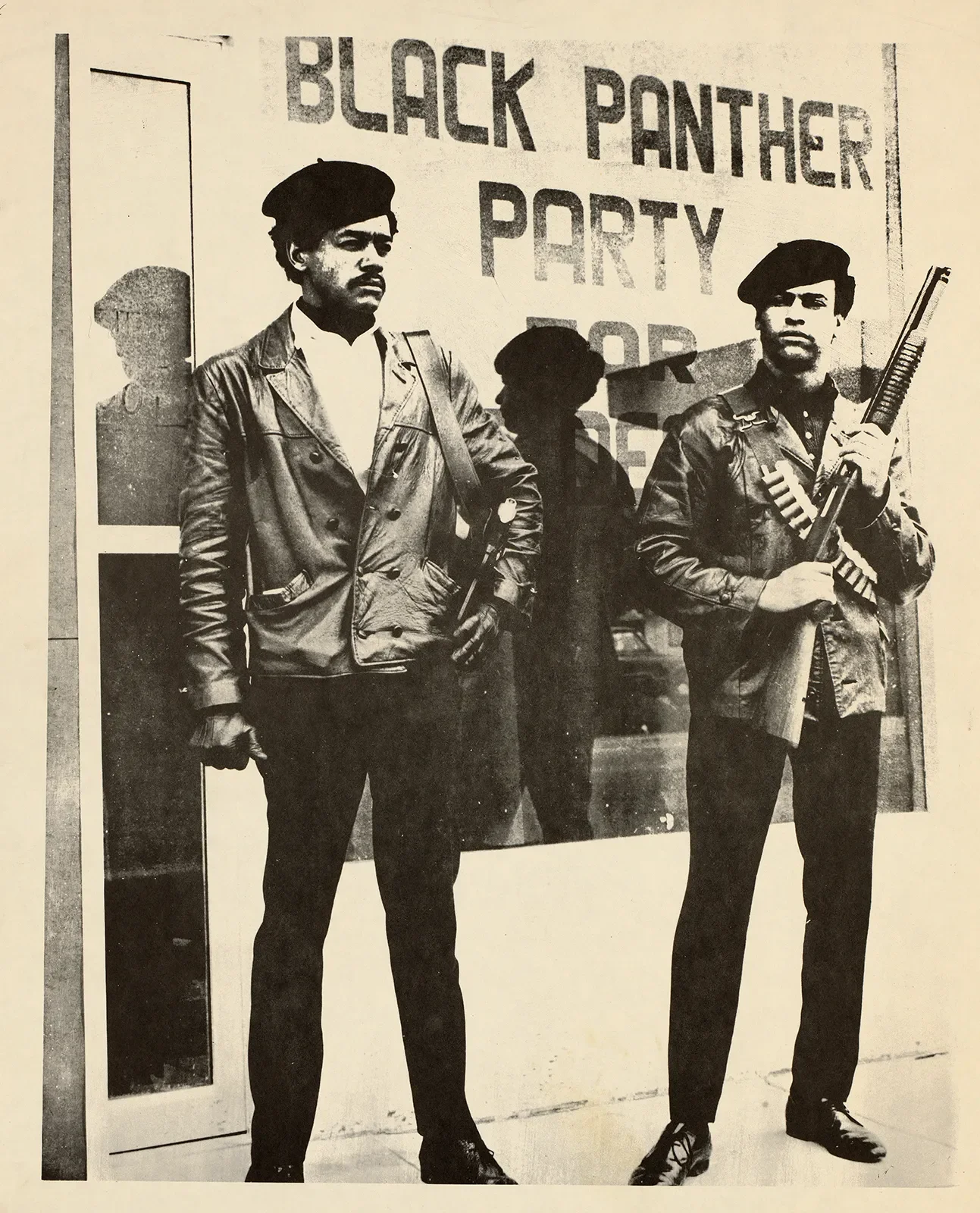
The Black Panther Party was founded in 1966 in Oakland, California by Huey P. Newton and Bobby Seale. Most people know the Panthers through images of armed resistance and confrontation with police. Fewer people know what they actually built.
The Party's Ten-Point Program demanded land, bread, housing, education, clothing, justice, and peace — framing these not as favors but as political rights tied to self-determination. And then they built the material programs to deliver on those demands directly. They called them survival programs — structured, community-operated services designed to meet the immediate needs the government refused to address.
By 1968, the Party's free breakfast program was feeding 20,000 children across 19 cities. That was one of over 60 survival programs the Party operated, including free food distribution, people's free medical clinics, sickle-cell anemia screening, a free ambulance service, cooperative housing, clothing and shoe programs, pest control, plumbing and maintenance programs, legal aid, free transportation to prisons for families of incarcerated people, and self-defense training for senior citizens.
These were not symbolic gestures. They were operational programs with coordination, staffing, and community infrastructure behind them. The free breakfast program alone was so effective that the FBI's director called it "the greatest threat" the Party posed — not their guns, not their rhetoric, but the fact that they were feeding children and building community trust while doing it.
The Panthers understood something that most contemporary mutual aid discourse has lost: material support and political education are not separate activities. Every survival program was paired with a theory of rights and self-determination. People were not just receiving food — they were learning why they were hungry, who benefited from their poverty, and what a just society would require. That integration of care and political analysis is what made the Party's work a system, not just a series of generous acts.
The Party was also deliberately destroyed. The FBI's COINTELPRO program — officially acknowledged in the FBI Vault — expanded in the 1960s specifically to target the Black Panther Party among other domestic organizations. Agents infiltrated chapters, manufactured internal conflicts, provided weapons to members while tipping off police, and coordinated raids that resulted in deaths. In 1969, Chicago police killed Fred Hampton in his bed during a pre-dawn raid planned with FBI intelligence. Approximately 90 shots were fired into his apartment. The Panthers fired one.
This history matters for anyone building community welfare systems today. The Panthers proved that structured, politically grounded, community-operated programs can work — and they proved that when they do work, power will try to destroy them. Both lessons are essential.
Survival programs. Political education. Care as a theory of freedom.
Books
Body and Soul: The Black Panther Party and the Fight Against Medical Discrimination Alondra Nelson (2011) The definitive account of the Party's health activism — free clinics, sickle-cell screening, and community-based medical programs. Shows how the Panthers understood health as a basic human right and built systems to provide it when institutions would not. Winner of the ASA Distinguished Contribution to Scholarship Award.
Black Against Empire: The History and Politics of the Black Panther Party Joshua Bloom and Waldo E. Martin Jr. (2013) Comprehensive political history of the Party from founding to decline. Covers the survival programs, internal politics, government repression, and the broader context of Black power movements.
Collective Courage: A History of African American Cooperative Economic Thought and Practice Jessica Gordon Nembhard (2014, 10th anniversary edition 2024) Places the Panthers within the long arc of Black cooperative economics alongside Du Bois, Ella Baker, the YNCL, and Fannie Lou Hamer. Essential for understanding the Party's survival programs as part of a tradition, not an isolated experiment.
Revolutionary Suicide Huey P. Newton (1973) Newton's autobiography. Documents his political formation, the founding of the Party, and the philosophy behind the survival programs. Primary source.
A Taste of Power: A Black Woman's Story Elaine Brown (1992) Brown led the Party from 1974 to 1977 — one of the few women to lead a major Black revolutionary organization. Her memoir documents leadership, internal contradictions, gender dynamics, and what it took to run the Party's programs.
Seize the Time: The Story of the Black Panther Party and Huey P. Newton Bobby Seale (1970) Co-founder Bobby Seale's own account of the Party's origins, philosophy, and early programs. Written while Seale was in prison.
Films
The Black Panthers: Vanguard of the Revolution (2015) Directed by Stanley Nelson. The most comprehensive documentary on the Party. Combines archival footage with interviews from former Panthers and FBI agents. Covers the survival programs, political vision, COINTELPRO, and the Party's decline.
The Black Power Mixtape 1967–1975 (2011) Directed by Göran Olsson. Uses 16mm footage shot by Swedish journalists during the Black Power era. Features Angela Davis, Bobby Seale, Stokely Carmichael, and others. Offers an outside perspective — how the movement looked to people who were not trying to destroy it.
Judas and the Black Messiah (2021) Directed by Shaka King. Dramatization of the FBI's infiltration of the Illinois Black Panther Party and the assassination of Fred Hampton. Not a documentary, but a powerful entry point for understanding how COINTELPRO operated on the ground.
WATCH: The Often Misunderstood Legacy of the Black Panther Party
Overview of the Party's full scope: from survival programs to political organizing to government repression.