Fannie Lou Hamer
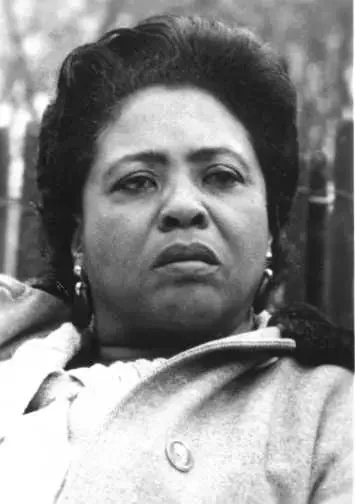
Fannie Lou Hamer was born in 1917, the youngest of twenty children in a sharecropping family in Montgomery County, Mississippi. She picked cotton from the age of six and left school at twelve. She was subjected to a forced sterilization without her consent. She was beaten by police until she lost vision in one eye for the act of trying to register to vote.
And she built one of the most important systems in American history.
In 1967, Hamer purchased forty acres in the Mississippi Delta and launched the Freedom Farm Cooperative — a land-based system that grew to over six hundred acres and provided food, housing, and economic independence for sharecroppers, tenant farmers, and domestic workers. The cooperative had membership dues, cash crops to cover operating costs, food distribution programs, and the now-famous pig bank, which gave families breeding pigs to build food sovereignty. Freedom Farm was mutual aid that had become infrastructure.
Freedom Farm was also unable to sustain itself. It struggled without institutional backing and long-term funding. Membership dues were affordable to only some families. The cooperative depended heavily on Hamer's own labor and leadership. When she died in 1977, much of what she built did not survive her.
That tension — between the brilliance of what she designed and the structural conditions that made it fragile — is central to the community welfare system framework. Hamer showed us what is possible. She also showed us what happens when communities are forced to build without durable resources, shared leadership, or continuing support.
If you study one person from this list, let it be her.
Sharecropper. Organizer. System builder.Walk with Me: A Biography of Fannie Lou Hamer Kate Clifford Larson (2021) The most complete biography available. Draws on declassified FBI and Department of Justice files, Smithsonian interviews, Library of Congress archives, and conversations with Hamer's family. Start here.
For Freedom's Sake: The Life of Fannie Lou Hamer Chana Kai Lee (1999) Documents her growth as an activist, the Freedom Farm Cooperative, and the personal costs of the work. Won the Robert F. Kennedy Book Award.
Until I Am Free: Fannie Lou Hamer's Enduring Message to America Keisha N. Blain (2021) Connects Hamer's legacy directly to present-day struggles — voting rights, economic justice, and community self-determination.
A Voice That Could Stir an Army: Fannie Lou Hamer and the Rhetoric of the Black Freedom Movement Maegan Parker Brooks (2014) Focuses on how Hamer used language, storytelling, and symbols as organizing tools. Useful for anyone interested in how she communicated, not just what she built.
The Speeches of Fannie Lou Hamer: To Tell It Like It Is Edited by Maegan Parker Brooks and Davis Houck (2010) Her actual speeches, collected. The closest you can get to hearing her thinking in her own words on paper.
To Praise Our Bridges Fannie Lou Hamer (1967) Her own autobiography. Short, direct, written in her voice. Available to read free online through the Fannie Lou Hamer's America website.
Books
Fannie Lou Hamer's America (2022) PBS. Directed by Joy Davenport. Produced by Monica Land, Hamer's grand-niece. Winner of the IDA Award for Best TV Feature Documentary. Told entirely through Hamer's own speeches, interviews, and songs. This is the most direct way to encounter her — in her own voice, on her own terms.
Standing on My Sisters' Shoulders (2002) Documentary about the women of the Mississippi civil rights movement, including Hamer. Tells the story from the perspective of grassroots women leaders — not the famous men who typically get centered in civil rights narratives.
Films
WATCH: Fannie Lou Hamer's powerful testimony -August 22, 1964
In 1964, Hamer traveled to the Democratic National Convention as a delegate of the Mississippi Freedom Democratic Party to challenge the seating of Mississippi's all-white delegation.
Before the Credentials Committee, she delivered testimony that described in unflinching detail the retaliation she faced for attempting to register to vote — including being fired from her plantation, driven from her home, and beaten by police in a Mississippi jail until she suffered permanent kidney damage and partial blindness.
Her account was so direct, so undeniable, and so damaging to the national image of American democracy that President Lyndon B. Johnson called an impromptu press conference mid-testimony to pull the television cameras away from her. The networks aired her full testimony that evening anyway. Within a year, Johnson signed the Voting Rights Act of 1965.