George Schuyler, Ella Baker + the Young Negroes' Co-operative League
In 1930, George Schuyler — a Black journalist, socialist intellectual, and columnist for the Pittsburgh Courier — published an "Appeal to Young Negroes," calling for young militant Black people interested in what he called "economic salvation" to build a new organization. Thirty people responded, paid their own way to Pittsburgh, and founded the Young Negroes' Co-operative League.
The YNCL was not a mutual aid group in the way that term is used today. It was a federation of consumer cooperatives and buying clubs — over two dozen chapters across the United States — designed to organize Black economic power through collective purchasing, democratic governance, and cooperative ownership. Members pooled resources to buy goods at lower prices, formed grocery cooperatives and credit unions, and trained communities in cooperative economics as a counter-power to exploitation. The League restricted membership to people between 18 and 35 because, as Schuyler wrote, "we consider most of the oldsters hopelessly bourgeois and intent on emulating Rockefeller and Ford on shoestring capital."
Ella Baker became the YNCL's first national director. She was 27 years old. Together, Baker and Schuyler designed a five-year plan that included training 5,000 cooperative leaders, establishing buying clubs and grocery cooperatives, building regional wholesale outlets, launching cooperative factories, and financing an independent college. The ambition was not modest — and it collided with Depression-era constraints and the structural racism that has always limited Black access to capital.
But what Baker built inside the YNCL outlasted the organization itself. Her philosophy of group-centered leadership — the belief that "strong people don't need strong leaders" — was forged in the cooperative movement before she brought it to the NAACP, the Southern Christian Leadership Conference, and the Student Nonviolent Coordinating Committee. The YNCL taught Baker that movements should be led by communities, not charismatic individuals, and that economic education is inseparable from political organizing. Every member had the same vote regardless of how many cooperative shares they held. That principle — democratic member control — is one of the foundations of the community welfare system framework.
Schuyler's path diverged sharply. He later became a conservative commentator and opposed the Civil Rights Act of 1964. But in the early 1930s, his vision for the YNCL was genuinely radical: a national network of Black-owned, democratically governed economic institutions designed to build collective power from the ground up. Baker carried that vision forward for the next fifty years. When she left the YNCL, she continued the work from her apartment — unpaid, without an office — because the work mattered more than the organization.
The YNCL matters to the community welfare system framework because it sits in exactly the space between mutual aid and system design. It was not simply circulating resources. It was building economic governance capacity — training people to understand how collective purchasing, member control, and coordinated institutions could function as infrastructure for long-term self-determination.
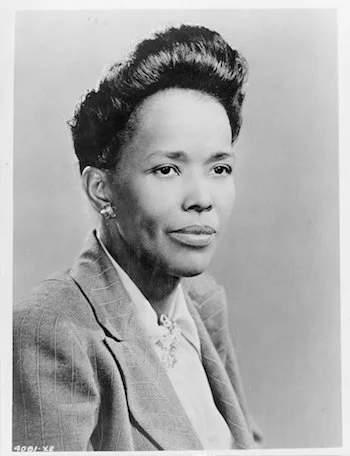
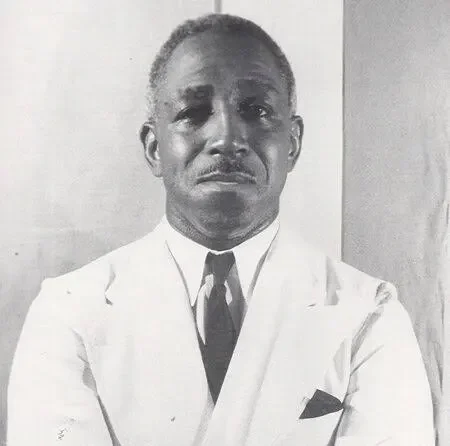
The organization that sat between mutual aid and system design.
Books
Ella Baker and the Black Freedom Movement: A Radical Democratic Vision Barbara Ransby (2003) The definitive biography of Ella Baker. Covers her role as the YNCL's national director, her philosophy of group-centered leadership, and how her cooperative organizing shaped the strategies she later brought to the NAACP, SCLC, and SNCC. Essential reading.
Collective Courage: A History of African American Cooperative Economic Thought and Practice Jessica Gordon Nembhard (2014, 10th anniversary edition 2024) Chapter 5 is dedicated to the YNCL. The most thorough published account of what the League built, how it was structured, and why it matters within the long arc of Black cooperative economics.
Dreaming the Present: Time, Aesthetics, and the Black Cooperative Movement Irvin Joseph Hunt (2022) Includes a chapter specifically on Schuyler and Baker's work through the YNCL. Argues they were more radical than previously understood — anarchic in their suspicion of centralized power and committed to self-governing enclaves over charismatic leadership.
Black No More George Schuyler (1931) Schuyler's satirical novel — not about cooperatives, but important for understanding him as a thinker and writer during the period he founded the YNCL. One of the first works of Afro-futurist fiction.
Fundi: The Story of Ella Baker (1981) Directed by Joanne Grant. The only documentary dedicated to Baker's life and organizing career. "Fundi" was her nickname — from a Swahili word meaning a person who passes down a craft to the next generation. That is exactly what she did.
Films